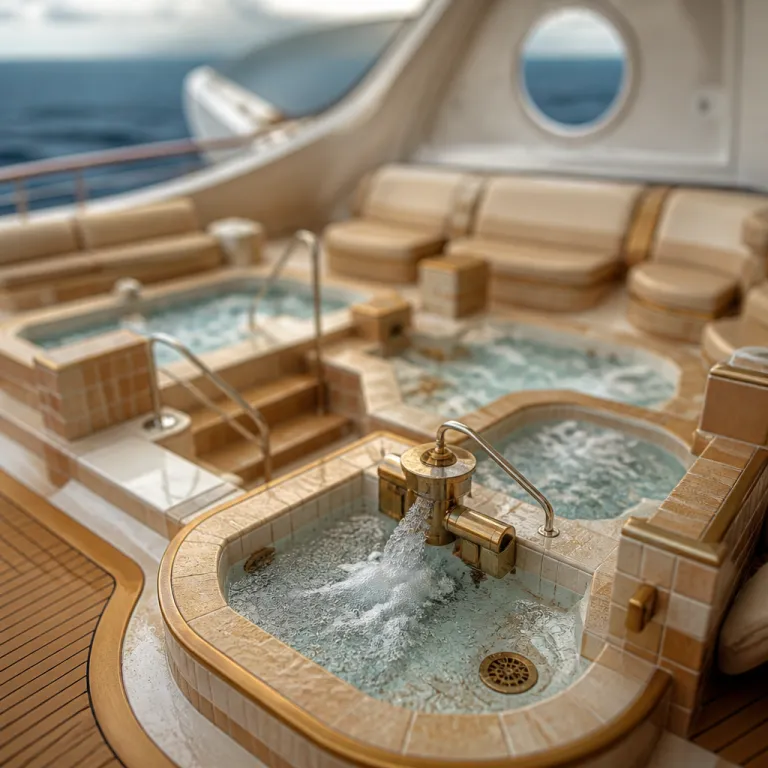
Reading a cruise ship through its hydrotherapy circuit
A serious cruise ship spa hydrotherapy guide starts long before you book. It begins when you look past glossy spa treatments lists and ask how the ship itself has been engineered for wellness and relaxation. A hydrotherapy circuit is not a decorative extra ; it is the clearest signal of how deeply a cruise line believes that wellness belongs at the heart of the voyage rather than as a profitable add on.
On a modern cruise ship, the hydrotherapy area usually sits within a dedicated thermal suite, a quiet zone of thermal rooms, steam rooms, experience showers and a hydrotherapy pool facing the ocean. When cruise ship spa designers talk about circuits, they mean a deliberate progression that alternates heat, cold, water pressure and rest to stimulate circulation and calm the nervous system. That is why a thoughtful cruise spa will map out a suggested route, from warm relaxation rooms to hotter saunas, then to cooling experiences and finally to loungers with wide ocean views.
Industry data shows that around sixty percent of cruise ships now sail with some form of hydrotherapy pool or thermal suites, a figure that has risen steadily as wellness has become a primary reason to choose certain cruises over land based resorts. Cruise line executives understand that passengers who invest in spa services and spa treatments tend to be among the most loyal guests onboard. A well designed cruise ship spa hydrotherapy guide therefore becomes both a wellness amenity and a quiet business strategy, shaping how guests use their sea days and how they remember the ship spas long after disembarkation.
What a real thermal suite should include on a luxury ship
When you walk into a thermal suite on any of the newer cruise ships, you should immediately sense a coherent journey rather than a random cluster of rooms. A credible cruise ship spa hydrotherapy guide will describe a sequence that starts with a tepidarium or warm relaxation room, moves through hotter saunas and steam rooms, then finishes with cooling experiences and a final rest in quiet suites or loungers. The aim is to create a rhythm of heat, cold and stillness that feels intuitive on a long day at sea.
At minimum, the best cruise spas now combine a large hydrotherapy pool with multiple thermal rooms, experience showers, an ice fountain and often a salt room or inhalation suite. A proper hydrotherapy treatment circuit might begin with ten minutes in a mild thermal room, followed by a hotter dry sauna, then a few minutes in aromatic steam before stepping under a cool mist shower and finally easing into the hydrotherapy pool with its underwater jets. This is where ship spas separate themselves from land based day spas, because the circuit is framed by the motion of the ocean and those uninterrupted ocean views.
On some cruises, the thermal suites are so thoughtfully designed that they become the highlight of sea days, especially for couples who prefer quiet wellness rituals over crowded pool decks. If you want to understand what the wellness culture onboard really feels like at first light, read a detailed account of a hydrotherapy circuit before sunrise and compare it with your own priorities. A strong cruise ship spa hydrotherapy guide will help you see how the thermal suite, the spa services menu and the wider cruise experience all interlock to support genuine relaxation rather than just selling more massages and facials.
Explora Journeys, Seabourn and Celebrity Cruises: three very different spa philosophies
Not all cruise lines think about wellness in the same way, and the hydrotherapy circuit is where those philosophies become visible. Explora Journeys, Seabourn and Celebrity Cruises all operate premium or luxury cruises, yet their ship spas feel strikingly different once you step into the thermal suites. Understanding those differences will help you choose the cruise spa that matches how you actually like to spend a day onboard.
Explora Journeys has positioned its Ocean Wellness concept as the quiet heart of its ships, and the hydrotherapy spaces reflect that ambition with generous scale and restrained design. On Explora III, the Ocean Wellness spa is anchored by a Conservatory Pool of about 14.7 m with a retractable roof, five heated whirlpools and around sixty private cabanas that blur the line between pool deck and spa suites. Here, the cruise ship spa hydrotherapy guide is less about selling individual spa treatments and more about encouraging guests to drift between hydrotherapy pool, relaxation rooms and outdoor decks as the ocean views shift throughout the day.
Seabourn takes a more explicitly therapeutic approach through its Mindful Living programme, developed in partnership with Dr Andrew Weil and focused on integrative medicine, meditation and movement. On these small ship vessels, the cruise spa and thermal suite feel almost like a floating wellness clinic, with options such as acupuncture and Chinese herbal consultations sitting alongside classic massages and facials. If you are considering a deeper digital reset, it is worth pairing this kind of programme with a line that actively supports a digital detox at sea, because the quiet hydrotherapy circuit becomes the natural anchor for screen free sea days.
Design forward versus clinical calm: how Celebrity and others use ship spas
Celebrity Cruises, particularly on Celebrity Edge and her sisters, has leaned into design forward ship spas that photograph beautifully and offer an enormous range of spa services. The Kelly Hoppen designed spa on Celebrity Edge lists more than one hundred and twenty treatments, from high tech facials to traditional massages, and the thermal suites are wrapped in sculptural loungers and dramatic lighting. For some couples, this feels like the best of both worlds ; a glamorous cruise spa that still offers a full hydrotherapy circuit and quiet corners for relaxation.
Yet when you compare these cruise ships with more clinically oriented wellness vessels, you start to see how the cruise ship spa hydrotherapy guide reveals priorities. On some cruise lines, the thermal suite is a compact add on to a busy treatment corridor, while on others the hydrotherapy pool, steam rooms and thermal rooms occupy prime real estate with panoramic ocean views. The difference is not just aesthetic, because a spacious thermal suite encourages guests to linger, to use the circuit on multiple sea days and to treat the spa as part of daily life onboard rather than a once per voyage indulgence.
There is also the question of who actually operates the cruise spas, because many mainstream cruise lines outsource their spa treatments to third party concessionaires such as Steiner or OneSpaWorld. When a cruise spa is run this way, you often see a more aggressive retail model, higher pressure sales after facials and massages, and pricing that feels closer to airport luxury than to a calm wellness retreat. A line operated spa, by contrast, tends to integrate the hydrotherapy circuit more gently into the rhythm of the cruise, using the thermal suites and relaxation rooms to enhance the voyage rather than to maximise revenue per day at sea.
When thermal suite passes are worth the price on a cruise
Access to a ship’s thermal suite and hydrotherapy pool is rarely included in the basic cruise fare, especially on larger cruise ships where spa services are a major revenue stream. Most cruise lines now sell day passes or full voyage passes for the hydrotherapy circuit, with prices that often sit between forty and one hundred United States dollars per person per day. Whether that represents value depends entirely on how you use your sea days and how central wellness is to your idea of a good cruise.
If you are a couple who enjoys slow mornings, quiet afternoons and structured relaxation, a cruise ship spa hydrotherapy guide can help you calculate the real cost per hour of calm. On a seven night cruise with three full sea days, a voyage long thermal suite pass might allow you to spend two or three hours each day moving between steam rooms, thermal rooms, hydrotherapy pool and relaxation suites. Spread across the week, that can feel like a modest premium for a private sanctuary onboard, especially when the alternative is a crowded main pool deck with limited shade and little sense of wellness.
On the other hand, if your itinerary is port intensive and you expect to spend most of each day ashore, a single day pass targeted at one or two quieter sea days may be smarter. Couples who plan pre dinner massages or facials on several evenings might also find that some cruise spas offer bundled packages that combine spa treatments with discounted thermal suite access. A thoughtful cruise ship spa hydrotherapy guide will always encourage you to read the fine print, because some ship spas restrict access to certain suites or sell more passes than the thermal suites can comfortably handle on a busy day onboard.
How to read a spa deck plan before you book your cruise
Long before you step onboard, the spa section of a deck plan can tell you whether a ship has been designed for genuine wellness or for quick revenue. Start by looking at the footprint of the cruise spa relative to the rest of the deck, and note whether the hydrotherapy pool and thermal suites sit along the hull with direct ocean views or are tucked into an interior space. A cruise ship spa hydrotherapy guide that takes design seriously will always highlight when thermal rooms and relaxation suites face the sea rather than a corridor.
Next, pay attention to how many distinct spaces the thermal suite includes, because a single combined sauna and steam room suggests a minimal investment in wellness. On more ambitious cruise ships, you will see multiple steam rooms at different temperatures, separate dry saunas, a salt room, experience showers and a clearly labelled hydrotherapy pool with loungers or heated benches nearby. This is where small ship operators and ultra luxury cruise lines often shine, because they can allocate more square metres per guest to spa treatments, relaxation rooms and quiet suites without needing to serve thousands of passengers per day.
Finally, consider how the spa connects to the rest of the ship, especially if you are pairing your cruise with a pre or post stay in a city hotel. If your voyage is part of a longer itinerary that includes solo time ashore, you may want to read guidance on finding a cabin that respects your budget and your solitude before committing. A well chosen cabin near the spa can turn the hydrotherapy circuit into an easy daily ritual, while a poorly located room can make even the best ship spas feel like an effort to reach at the end of a long day.
Using hydrotherapy to compare cruises with land based wellness stays
Many couples now weigh a wellness focused cruise against a land based spa resort, and the hydrotherapy circuit is often the deciding factor. On land, you might expect a large thermal suite, multiple pools and quiet relaxation rooms as standard in a serious wellness property. At sea, those same features are still a differentiator, which is why a detailed cruise ship spa hydrotherapy guide can be more useful than a glossy brochure when you compare options.
One practical way to evaluate value is to compare the cost of daily spa access on cruises with the resort fees or spa passes at land based hotels. When a cruise ship offers a generous thermal suite, a spacious hydrotherapy pool and well designed steam rooms with wide ocean views, the per day cost of access can undercut many high end resorts once you factor in accommodation, dining and changing scenery. The key is to choose cruise lines and specific cruise ships where the spa treatments, spa services and thermal suites are integrated into the overall design rather than squeezed into leftover space.
As wellness demand grows, more cruise lines are investing in advanced hydrotherapy features and personalised spa treatments, and industry data already shows that average spa revenue per passenger sits around one hundred United States dollars per voyage. That figure reflects not only massages and facials but also the sale of thermal suite passes, which are increasingly central to how cruise spas shape guest behaviour on sea days. When you read that “A series of spa facilities like pools and saunas designed for relaxation and therapy” is what defines a hydrotherapy circuit, and that “They indicate the ship's commitment to passenger wellness and luxury”, you begin to see why the circuit itself is the most honest measure of a ship’s wellness intentions.
Key figures that frame the modern cruise spa
- Around 60 % of contemporary cruise ships now sail with some form of hydrotherapy pool or thermal suites, according to recent cruise industry analysis, reflecting the rapid shift toward wellness focused ship design.
- Average spa revenue per passenger on mainstream and premium cruises is estimated at about 100 United States dollars per voyage, a figure that includes spa treatments, retail sales and thermal suite passes and underlines how central spa services have become to onboard economics.
- Hydrotherapy circuits are most commonly found on newer vessels in the fleets of premium and luxury cruise lines, which use expansive thermal suites and ocean facing relaxation rooms as a key differentiator from older ships and land based competitors.
- Passenger feedback consistently shows higher satisfaction scores on ships where the cruise spa offers a clearly structured hydrotherapy circuit, suggesting that design quality in thermal rooms and steam rooms has a direct impact on perceived value.
FAQ: cruise ship hydrotherapy circuits and wellness at sea
What is a hydrotherapy circuit on a cruise ship ?
A hydrotherapy circuit on a cruise ship is a planned sequence of spa facilities such as saunas, steam rooms, experience showers and a hydrotherapy pool that guests move through for relaxation and therapeutic benefit. As one expert definition puts it, “A series of spa facilities like pools and saunas designed for relaxation and therapy”. On well designed cruise spas, this circuit usually sits inside a dedicated thermal suite with loungers and ocean views.
Why are hydrotherapy circuits important on cruise ships ?
Hydrotherapy circuits are important because they show how seriously a ship treats wellness rather than treating the spa as a simple revenue centre. Industry guidance notes that “They indicate the ship's commitment to passenger wellness and luxury”, which is why many premium cruise lines now highlight their thermal suites as a core feature. For couples, a strong circuit can turn sea days into restorative rituals that rival or surpass land based spa experiences.
Do all cruise ships have hydrotherapy circuits ?
Not every cruise ship offers a full hydrotherapy circuit, and availability varies widely by cruise line, ship size and age. Newer premium and luxury ships are more likely to feature expansive thermal suites with multiple thermal rooms, steam rooms and a hydrotherapy pool, while older or smaller vessels may offer only basic saunas and treatment rooms. When comparing cruises, always check deck plans and spa descriptions rather than assuming that every cruise spa includes a full circuit.
How can I tell if a thermal suite pass is worth buying ?
The value of a thermal suite pass depends on your itinerary, your daily rhythm and how much time you realistically spend in the spa. If your cruise includes several sea days and you enjoy long sessions in hydrotherapy pools, steam rooms and relaxation rooms, a voyage long pass can be excellent value. For port heavy cruises or guests who mainly book individual massages and facials, a single day pass on a quieter day onboard may be more sensible.
How do cruise ship spas compare with land based wellness resorts ?
Top tier cruise ship spas now rival many land based wellness resorts in terms of hydrotherapy facilities, especially on ships with large thermal suites and ocean facing relaxation suites. The main difference is context, because at sea the circuit is framed by changing horizons and the gentle motion of the ship rather than a fixed landscape. When you factor in accommodation, dining and travel between destinations, a carefully chosen cruise with a strong hydrotherapy circuit can offer competitive value against high end spa resorts.