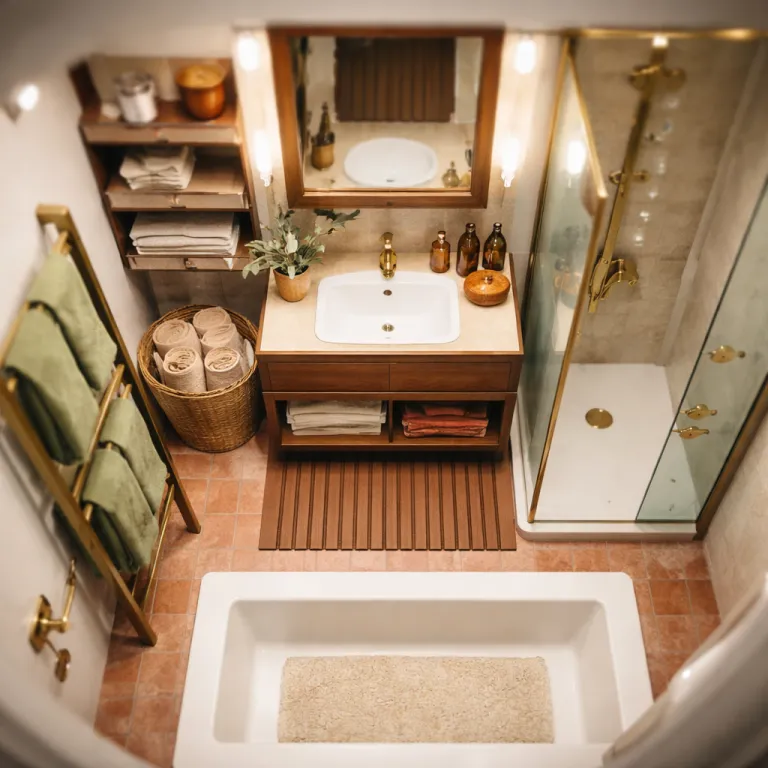
The bathroom as the true measure of a luxury cruise suite
Step into any luxury cruise suite bathroom and you immediately sense the line’s real priorities. In a way that the bedroom and balcony rarely manage, this compact room on a modern cruise ship exposes every design decision, every compromise, every quiet upgrade. For Premium Family travelers comparing suites across Caribbean cruises and Europe sailings, the bathroom is the quickest way to judge whether the ship truly deserves its five star positioning.
Designers often work with a typical cruise ship bathroom size of around 2.3 square metres (roughly 25 square feet), so every centimetre of space is strategic. Industry presentations and shipbuilding case studies describe this as a common footprint for standard wet cells on large ships, with only top suites and owner residences exceeding it. Within that envelope, naval architects and interior design teams must juggle plumbing, storage, safety and aesthetics, while cruise ship passengers simply want a calm room that feels generous, private and easy to use. When you compare several ship suites in person, you realise that the best suites feel larger not because they add square metres, but because the layout, lighting and sightlines are handled with almost residential care.
On a top tier royal suite or penthouse suite, the bathroom often runs the full width between bedroom and balcony, creating a linear flow that feels more like a coastal villa than a cabin. Mid tier suites on a big cruise ship may tuck the bathroom behind the living room wall, which can work beautifully if the door placement and circulation are thoughtful. Entry level family suite layouts sometimes compress the bathroom beside the room entrance, and that is where you see whether the line has still invested in quality fixtures or quietly downgraded the specification.
The materials test: stone, surfaces and what they reveal
Your first thirty seconds in a luxury cruise suite bathroom design should be tactile, not theoretical. Run a hand along the vanity edge, feel the shower threshold under bare feet, and you will know whether the ship belongs in the same conversation as a Regent Suite or a Four Seasons I residence at sea. Solid marble or onyx has a cool, continuous grain that wraps from countertop to splashback, while engineered stone and reconstituted composites feel warmer, lighter and often repeat their pattern too perfectly.
On ships such as Regent Seven Seas Splendor, the master and owner suite bathrooms use thick stone slabs with mitred edges, which signal a generous build budget and a focus on longevity; this is documented in the line’s own design brief and launch materials. In contrast, some mass market cruise ships use thin stone veneers over lightweight substrates, which can still look elegant but chip more easily around the basin and shower seat. When you tour several suites on the same ship, you will notice that the Royal Suite and Loft Suite tiers usually receive more substantial stone, while standard family rooms rely on high quality laminates that mimic marble from a distance.
Sustainability is now part of this materials test, especially on new generation ships sailing both the Caribbean and Europe. Publicly available environmental reports from several lines describe experiments with recycled metals, reclaimed wood detailing and low VOC sealants in bathrooms, which not only improve air quality but also signal a long term design strategy rather than a quick cosmetic refresh. For travelers planning premium Antarctica cruise tours or other expedition style itineraries, that sustainable approach in the bathroom often mirrors a wider environmental commitment across the ship and its itineraries.
Fixtures, water rituals and the geometry of real comfort
Once you have read the materials, turn to the plumbing and the way water moves through the space. A genuinely luxurious cruise suite bathroom design will almost always combine a ceiling mounted rain head with a separate hand held shower, ideally on a sliding rail for different heights. When you see only a single rain head in a tight cubicle, even in a so called Royal Loft or Loft Suite, you are looking at a cost saving disguised as minimalism.
Brand names on fixtures matter because they reveal the build budget and maintenance philosophy behind the ship suites. Dornbracht, Hansgrohe and Grohe Spa fittings usually indicate that the cruise line expects heavy use and wants precise temperature control, while anonymous OEM mixers can feel light, imprecise and harder to clean. In a Regent Suite or top tier Owner Suite, you will often find thermostatic controls, separate volume levers and sometimes discreet body jets, whereas standard family suite bathrooms may rely on a single lever mixer that is perfectly functional but less indulgent.
The deep soaking tub is where engineering meets romance, especially on Caribbean cruises where guests dream of a long bath after a day ashore. A true freestanding tub in a Royal Suite or Penthouse Suite requires structural reinforcement and careful weight calculations, which is why you usually see it placed close to a bulkhead rather than floating in the middle of the room. Built in tubs with tiled aprons can still feel luxurious, but if the ledge is too wide or the angle too upright, you know the design was driven more by plumbing constraints than by the ritual of bathing.
Light, toiletries and the quiet codes of luxury at sea
Lighting in a cruise suite bathroom is the difference between spa like calm and airport washroom glare. Look for layered light: a soft general wash from the ceiling, vertical sconces flanking the mirror for grooming, and a focused shaving mirror with integrated LEDs. When the only light source is a single downlight over the basin, even the best marble and fixtures cannot rescue the atmosphere.
Toiletry programmes are another subtle but reliable indicator of where a cruise line positions its suites. Bespoke house collections from brands such as Acqua di Parma, Bulgari or Ortigia usually appear in the highest categories, including the Regent Suite and other ship suites marketed as the best on board. Mass prestige lines may offer a generic spa range in standard rooms while reserving more distinctive fragrances for the Royal Suite, Family Townhouse or Ultimate Family configurations that command higher fares.
For Premium Family travelers, the practical details matter as much as the labels. Dual sinks, a separate shower and tub, and enough shelf space for several people transform a simple room into a genuinely functional family suite bathroom. When you read cruise deals promising an ocean view bathroom with a balcony and panoramic seas view, check whether the layout still allows privacy between the bedroom, living room and dining area zones, because glass walls and open plan concepts can quickly feel less relaxing with children in the mix.
Reading layouts across lines: from Caribbean icons to quiet Europe itineraries
Different cruise lines express their design philosophy most clearly in the way they handle bathroom layouts across their suites. On Royal Caribbean ships such as the Quantum class, the Royal Loft and other top suite categories often feature split bathrooms, with a shower room separate from the main bathroom to ease morning routines for larger groups. That same logic appears in the Ultimate Family and Family Townhouse concepts, where a compact extra shower room near the kids’ bedroom keeps the main bathroom calmer for adults.
Ultra luxury lines sailing both the Caribbean and Europe, including Regent Seven Seas and Seabourn, tend to prioritise single, expansive bathrooms with generous dressing areas. A Regent Suite bathroom may open directly onto a walk in wardrobe, then flow into the bedroom and out to the balcony, creating a residential circuit that feels more Penthouse Suite than cabin. Seabourn’s Owner Suite layouts often place the tub under a window, offering a partial ocean view while still keeping the main mirror wall perfectly lit for grooming.
Across all these ships and cruises, one constant remains: “Why are cruise ship bathrooms small? Space constraints require compact designs.” That reality makes it even more important to study the plan before you book, especially when comparing cruise deals for a Premium Family holiday. On cruise-stay.com we often advise readers to check suite bathroom features before booking and to consider suite upgrades for better amenities, because the bathroom is where you will feel the difference between a merely large room and a genuinely well designed suite at sea.
How to inspect a bathroom before you book your next suite
Evaluating a luxury cruise suite bathroom design from your laptop is not as difficult as it seems. Start by zooming in on the floor plan and photographs to understand how the bathroom relates to the bedroom, balcony and any separate living room or dining area. If the only images show a tight angle on the basin, assume the space is compact and look for written dimensions to confirm.
Next, read the specification list with the same care you would apply to a hotel in a major city. Look for mentions of double vanities, separate shower and tub, heated floors, and branded fixtures, because these details usually appear first in the marketing for the best suites. When a cruise ship highlights its ship suites with phrases such as ocean view bathroom or panoramic seas view, check whether that view is from a small porthole or a full height window, as the difference in light and sense of space is dramatic.
Finally, cross reference the bathroom details with the rest of the suite category and the overall ship. A Royal Suite on a large cruise ship that still offers only a shower curtain and basic toiletries may not align with your expectations, especially if you are used to Europe river vessels or Caribbean resort standards. If you value design and ambiance as much as itinerary, you may also appreciate more niche experiences such as elevated escapes at sea, where the focus on calm, well lit bathrooms and thoughtful materials extends across the entire onboard environment.
Quick bathroom quality checklist (for comparing suites before you book): materials (solid stone vs laminate), fixtures (branded mixers, dual shower heads), layout (separate tub and shower, split bathroom options), lighting (layered, glare free), and storage (shelves, drawers, hooks for a Premium Family group).
FAQ
Are all cruise ship suite bathrooms private ?
Yes, each cabin has a private bathroom, including all suite categories. The difference lies in size, layout and finishes, with higher tier suites offering larger showers, dual sinks and sometimes separate powder rooms.
Do all suites have bathtubs ?
Do all suites have bathtubs? Not all; some have showers only. On many ships, only the Royal Suite, Penthouse Suite and similar premium categories include a soaking tub, while standard family suite layouts prioritise larger showers instead.
Why are cruise ship bathrooms smaller than hotel bathrooms ?
Bathrooms on cruise ships must fit within strict weight and space limits, because every extra square metre affects stability and fuel consumption. Designers therefore work with compact footprints and rely on smart layouts, mirrored walls and careful lighting to create a sense of volume.
What should Premium Family travelers prioritise in a suite bathroom ?
Families should look for dual sinks, a separate shower and tub where possible, and enough storage for several people’s toiletries. Split bathroom concepts, where a toilet and small basin sit apart from the main bathroom, can also ease busy mornings on Caribbean cruises and Europe itineraries.
How can I compare bathroom quality across different cruise ships ?
Compare floor plans, look for branded fixtures and stone surfaces, and read detailed reviews that mention water pressure, lighting and storage. Cross line examples such as Silversea, Regent and Seabourn help set a benchmark, making it easier to judge whether another cruise ship’s suite bathrooms meet your expectations.