Why the luxury cruise crew ratio matters more than the brochure
On a luxury cruise, the published luxury cruise crew ratio looks reassuringly precise. Marketing teams highlight that the typical crew-to-passenger ratio on luxury cruises is “typically around 1 crew member for every 1.3 passengers.” Behind that elegant statistic, though, sit very different service philosophies between cruise lines and individual cruise ships.
Ultra-luxury cruise ships often promote a near 1:1 passenger–crew balance, and industry surveys regularly answer the question “What is the crew-to-passenger ratio on ultra-luxury cruises?” with “often 1:1, meaning one crew member per passenger.” Contemporary mass-market cruises, by contrast, may operate closer to 0.4 crew members per guest, which means a single crew member can be responsible for several passengers at peak moments. When you compare luxury cruise lines with premium or mainstream brands, the headline passenger ratio is only the first filter, not the final verdict.
For a business-leisure guest extending a work trip, the luxury cruise crew ratio becomes a practical metric rather than a vanity number. You are not just comparing ship passenger capacities or counting cabins; you are assessing how many crew members are genuinely available when you need Wi‑Fi support, quiet in‑suite dining, or a last‑minute meeting setup. As one hotel director on a small luxury ship put it in a Seatrade Cruise News interview (Seatrade Cruise News, “Staffing for the Small-Ship Guest Experience,” 12 May 2022), “Guests remember the three minutes when someone solves a problem, not the three pages of statistics in the brochure.” The best cruise experiences come when the passenger–crew balance is felt in those small, unscripted interactions rather than only at the captain’s reception.
The hidden maths behind crew numbers on luxury cruise ships
Every luxury cruise line publishes a crew ratio, but the composition of that team matters. A significant share of crew members are officers, engineers, and technical specialists whose work keeps the cruise ship safe yet rarely involves direct contact with guests. When you see a 1:1 passenger–crew figure, only a portion of that total headcount is actually delivering front-of-house service in suites, restaurants, and lounges.
On a typical luxury cruise, published data from Seatrade Cruise News and similar trade sources indicate that the effective service ratio is closer to the benchmark of around 1 crew member for every 1.3 passengers once you strip out purely technical roles (for example, Seatrade Cruise News, “Sizing Up the Luxury Fleet,” 7 March 2023). That still compares favourably with contemporary cruise lines, where the same reports indicate a crew-to-passenger ratio of about 0.4, and it explains why breakfast service on a smaller ship can feel almost private. For illustration, a 700‑guest luxury vessel might sail with roughly 520 crew, of whom around 300 work in guest-facing roles, while a 3,000‑passenger mainstream ship might carry 1,200 crew with only about 700 in direct service positions; these figures are indicative composites drawn from fleet summaries rather than a single named ship. When you compare luxury options, ask how many passenger-facing roles exist per deck, not just the total crew members listed in the brochure.
Different cruise ships allocate their teams in distinct ways, and that allocation shapes your daily rhythm on board. Some ships best known for formal service traditions, such as certain Viking Ocean vessels, invest heavily in cabin stewards and restaurant waiters, while others prioritise spa therapists or shore-excursion staff. When you compare luxury cruise lines like Regent, Silversea, Crystal, or MSC’s premium ships, the same headline passenger ratio can mask very different service experiences on busy days at sea.
Four moments when the crew ratio feels real or purely theatrical
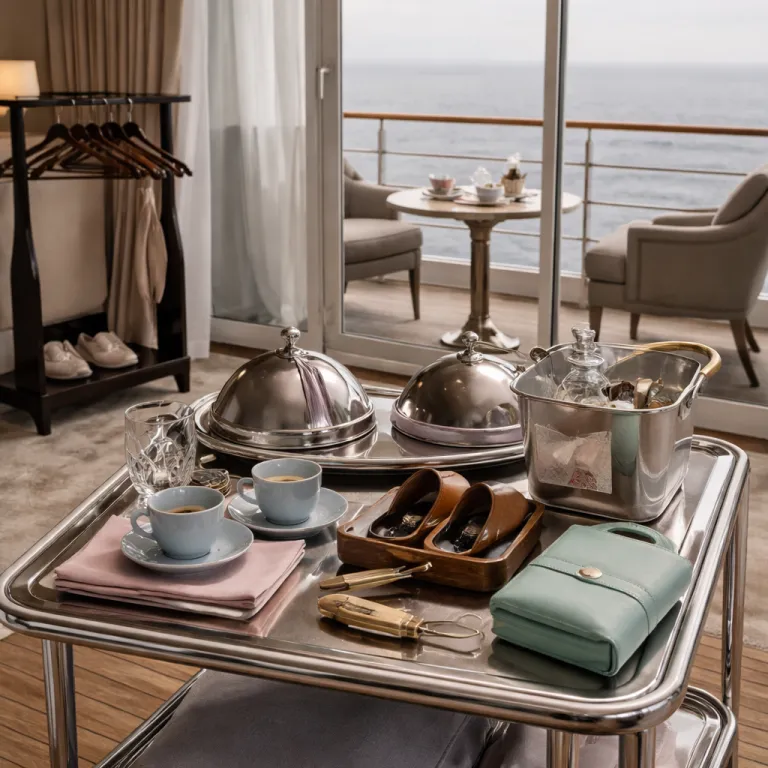
The first test of any luxury cruise crew ratio comes with morning room service. On a ship where the passenger–crew balance is genuinely generous, breakfast arrives on time, hot, and laid out with quiet precision even when half the cabins order between 08:00 and 09:00. Where the ratio is more theatre than reality, trays stack up in corridors and a single crew member rushes between suites, apologising for delays.
In‑suite dining during peak dinner hours is the second pressure point, especially for business travellers working late in their cabins. A cruise ship that truly honours its published passenger–crew numbers will have enough waiters and butlers to plate and serve multi‑course meals in several cabins simultaneously, without raiding the main restaurant floor. On ships where the crew–passenger promise is stretched, you may find that the best cruise experience is only available in the main dining room because in‑suite service is quietly discouraged on busy days.
Butler turndown service is the third moment when the luxury cruise crew ratio either delights or disappoints. On Silversea, for example, the per‑suite butler model means each guest knows their crew member by name, and the passenger ratio feels intimate when your preferences are remembered unprompted. A Silversea guest quoted in Cruiseable’s review archive (“Silversea: Service That Anticipates,” Cruiseable, accessed January 2024) described it as “having a hotel manager who only looks after twelve people, and somehow always appears five minutes before you realise you need something.” The fourth test is the last‑minute spa or shore‑excursion request, where cruise lines with a robust crew‑to‑passenger balance can often reshuffle schedules, while others blame limited slots despite impressive‑sounding ship statistics.
Different service philosophies: butlers, concierges, and bridge culture
Silversea’s per‑suite butler model and Regent’s concierge‑floor approach illustrate how the same luxury cruise crew ratio can be deployed in contrasting ways. On Silversea cruise ships, almost every cabin category includes a dedicated butler, so the passenger–crew interaction is highly personalised from unpacking to late‑night canapés. Regent, by comparison, concentrates its most experienced crew members in concierge‑level cabins, offering elevated service there while maintaining a strong but less intensive presence elsewhere on the ship.
For guests, the question is not which philosophy is objectively best, but which aligns with your travel style and working patterns. If you are a business‑leisure traveller who spends long days in your cabin on video calls, a per‑suite butler on a smaller Viking Ocean or Silversea ship may justify a higher cruise price. If you prefer to work in public spaces and treat your cabin as a sleeping base, a concierge floor on a larger MSC or Regent vessel might offer better value when you compare luxury options and track the latest price drops.
Bridge culture also influences how the crew ratio plays out in public spaces, especially during captain’s receptions and formal nights. On ships best known for a seafaring ethos, senior officers mingle naturally with passengers, and the passenger–crew dynamic feels relaxed rather than staged. When you evaluate cruise lines, notice whether the captain and senior crew members are visible around the ship on sea days, or only appear for scripted photo opportunities.
The business leisure test: when a near 1:1 ratio truly earns its premium
For an executive turning a conference into a five‑day luxury cruise, the crew ratio is not an abstract statistic. You need reliable Wi‑Fi support in your cabin, flexible dining hours, and a quiet corner of the observation lounge that doubles as a temporary office. On ships where the passenger–crew balance is strong, a single call to your butler or concierge can coordinate all three within minutes.
Working from a cruise ship also exposes the limits of inflated passenger‑ratio claims, especially on longer itineraries with many consecutive days at sea. When the ship is full and the ocean conditions keep everyone indoors, the real test is whether there are enough crew members to maintain calm service in cafés, lounges, and co‑working‑style spaces. If you find yourself queueing repeatedly for coffee or competing for power outlets, the advertised crew‑to‑passenger number has not translated into practical comfort.
Price is the final variable, and here the latest price trends and occasional cruise price drops can make ultra‑luxury surprisingly competitive. When you compare luxury itineraries, look beyond the latest price headline and calculate the effective cost per day, including Wi‑Fi, speciality dining, and gratuities, because these inclusions often reflect the underlying crew‑per‑passenger investment. The best cruise for a business‑leisure traveller is usually the one where the crew ratio quietly supports your working rhythm rather than shouting about ship statistics in glossy brochures.
FAQ
How does the luxury cruise crew ratio affect daily service quality ?
A higher luxury cruise crew ratio means more crew members are available for each passenger at key moments such as breakfast, turndown, and last‑minute requests. On ultra‑luxury cruise ships with a near 1:1 passenger–crew balance, staff can personalise service in cabins and public spaces without rushing. On contemporary cruise lines with a lower passenger ratio, you may notice slower responses during peak hours and more reliance on self‑service.
Is a smaller ship always better for personalised service ?
Smaller cruise ships often feel more intimate, but size alone does not guarantee the best cruise experience. What matters is how many passenger‑facing roles exist per deck and how those crew members are scheduled on busy days at sea. Some larger cruise lines allocate generous teams to premium cabin categories, while certain small ships operate with leaner staffing despite modest passenger numbers.
What questions should I ask before booking a luxury cruise as a business traveller ?
Ask how many butlers or concierges are assigned per guest deck, and whether Wi‑Fi support is handled by dedicated crew members or general reception staff. Clarify if in‑suite dining is fully supported during restaurant peak times, and whether spa or salon teams can accommodate last‑minute changes on sea days. Finally, compare luxury itineraries by checking what is included in the cruise price, because packages that bundle connectivity and service extras often reflect a stronger underlying crew ratio.
How do luxury cruise lines differ from premium or mass market lines on staffing ?
Luxury cruise lines typically operate with a higher crew‑to‑passenger ratio, often around one crew member for every 1.3 passengers, while contemporary lines may run closer to 0.4. On luxury cruise ships, more of the team is dedicated to front‑of‑house roles such as butlers, waiters, and concierges, which directly benefits guests. Premium and mass‑market ships may have excellent technical teams but fewer staff per passenger in visible service positions.
Can price drops on luxury cruises signal weaker service levels ?
Occasional price drops or an attractive latest price do not automatically mean a compromise on the luxury cruise crew ratio. Sometimes cruise lines adjust pricing to fill remaining cabins close to departure, while maintaining the same number of crew members already scheduled for the voyage. The more reliable indicator of service quality is the long‑term staffing philosophy of the cruise line and how consistently passenger feedback mentions attentive, unhurried service.
Sources
Seatrade Cruise News, “Sizing Up the Luxury Fleet,” 7 March 2023; Seatrade Cruise News, “Staffing for the Small-Ship Guest Experience,” 12 May 2022; Sage Journals, Tourism and Hospitality research articles on cruise service staffing (various issues, 2020–2023); Cruiseable, “Silversea: Service That Anticipates,” review archive, accessed January 2024.