The cruise industry net zero emissions promise versus your next sailing
When cruise lines promote long‑term climate pledges, the horizon they describe can feel abstract while you are simply choosing a suite and a sailing date. Yet the ship under your feet today already sits inside a tightening regulatory frame, because the International Maritime Organization (IMO) now expects the global shipping sector to reach net zero greenhouse gas emissions around mid century. For a traveler booking a premium voyage, the practical question is sharp: how much of that future is already built into the cruise ship you are about to board?
The IMO’s decarbonization strategy is not marketing language but binding policy for international shipping, and it covers cruise vessels in the same way it covers container ships or tankers. In July 2023, member states adopted a revised greenhouse gas strategy that aims for net zero emissions “by or around, i.e. close to, 2050,” backed by measures such as the Energy Efficiency Existing Ship Index (EEXI) and the Carbon Intensity Indicator (CII), which entered into force in 2023 with mandatory reporting from 2024. This matters for you because every new cruise ship order, from Royal Caribbean’s Icon of the Seas to smaller luxury brands, is now designed around efficiency scores and alternative fuels that will shape both itineraries and onboard power systems.
Shipping currently accounts for about 2.89 percent of global carbon dioxide emissions, according to the IMO’s Fourth GHG Study, and the cruise segment is a visible, high‑profile slice of that footprint. The ships that carry you to the Caribbean or the fjords still mostly burn marine fuel oil or heavy fuel blends, even when brochures highlight liquefied natural gas (LNG) as a cleaner option. As you compare cruise lines and specific ships, the real luxury question becomes whether the vessel’s energy and fuel choices align with your own expectations of an environmentally responsible, genuinely low‑impact cruise experience.
LNG, marine fuel and why “less bad” is not yet zero emission
Most of the newest premium cruise ships are powered by LNG, and the industry often presents this gas as a bridge to a cleaner future. LNG can reduce carbon dioxide emissions by roughly one fifth compared with traditional marine fuel oil, yet it introduces methane slip, a potent greenhouse gas effect that undermines any simple net zero narrative. When you see glossy images of a gleaming LNG‑powered cruise ship, remember that the engine room is still burning fossil fuel, not operating on truly zero‑emission technology.
Independent technical assessments, including work by classification societies such as Lloyd’s Register and peer‑reviewed studies in journals like Environmental Science & Technology, underline this nuance. Research on low‑pressure dual‑fuel engines has found methane slip rates high enough to erode much of LNG’s climate advantage unless carefully controlled. LNG engines are more energy efficient than many heavy fuel systems and help cruise companies comply with tightening air‑quality rules in sensitive ports, yet they lock the shipping industry into gas infrastructure for decades, which means any credible net zero pathway will depend on future retrofits, synthetic fuels or entirely new power systems layered onto existing hulls.
When you book a luxury cruise today, you are effectively choosing between ships that burn fuel oil, ships that burn LNG and a tiny handful experimenting with fuel cells or hybrid power. None of these mainstream options delivers true net zero or zero‑emission performance yet, even if marketing language leans heavily on words like sustainable, environmental and friendly. The honest position is that LNG‑powered cruise ships are a step away from the dirtiest heavy fuel, but they remain part of a fossil‑based marine energy system that must change course sharply to meet mid‑century climate targets.
Hydrogen, wind and fuel cells : what future tech means for luxury cabins
The technologies that could eventually deliver climate‑neutral cruising are already being tested, but almost never at the scale of a full‑size ocean liner. Hydrogen‑based fuel cells, advanced batteries and even modern sail systems are appearing first on smaller vessels, pilot projects and one‑off ships rather than across entire cruise fleets. For a guest booking a suite today, these innovations feel distant, yet they will shape the future of what a luxury, environmentally conscious voyage looks like.
Hydrogen fuel cells are often presented as the holy grail for zero‑emission shipping because they generate electric power without direct carbon emissions when supplied with green hydrogen. In practice, only a few ships, such as hybrid expedition vessels in Northern Europe and demonstration projects on ferries in Norway, are trialling fuel cells at modest scale, and they still rely on conventional fuels for most propulsion. Ambitious wind‑assisted concepts, including large rigid sails and projects highlighted in pieces such as wind power at the heart of luxury cruising, show how a new generation of ships might combine wind, alternative fuels and shore power to cut emissions dramatically.
Every serious environmental roadmap for the cruise sector assumes a mix of alternative fuels, from green methanol to synthetic gas, supported by fuel cells and ultra‑efficient hull designs. These future ships will still need ports that can supply clean fuels and high‑capacity shore power so that onboard generators can shut down completely while alongside. When you evaluate a cruise company’s sustainability claims, look for concrete references to fuel cells, alternative fuels and shore‑power readiness, rather than vague promises about a distant carbon‑neutral fleet.
Ports, shore power and why infrastructure will decide the pace of change
No credible decarbonization pathway for cruising works without ports that can deliver clean electricity and low‑carbon fuels at scale. Even the most advanced cruise ships remain dependent on the energy systems of the cities they visit, because shore‑power connections and alternative fuels must be available pier‑side. The shipping industry can design efficient ships, but ports and national energy grids will decide how quickly those designs translate into real emissions cuts.
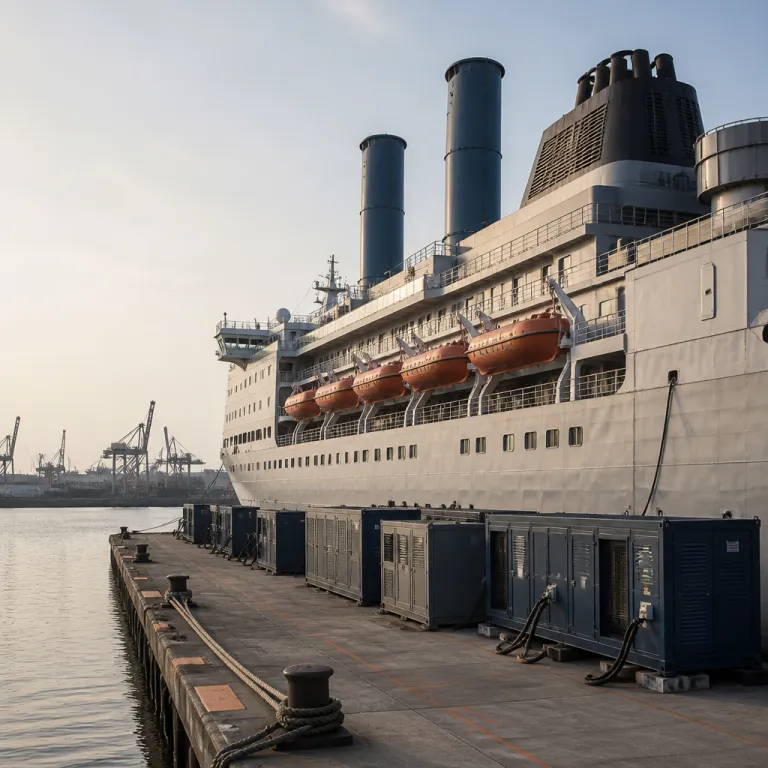
Shore power allows a cruise ship to switch off its engines in port and draw electricity from the local grid, which can dramatically reduce local air pollution and overall greenhouse gas emissions if the grid is low carbon. Only a limited number of ports worldwide currently offer high‑capacity shore power for large cruise ships, and many of those are in regions with strong environmental regulations. For Caribbean itineraries, even major destinations served by Royal Caribbean and other large cruise lines are still building out the substations and cabling needed to handle multiple ships on full shore power simultaneously.
Alternative fuels such as green methanol, ammonia or synthetic gas will require entirely new bunkering systems in ports, along with strict safety protocols and coordination between fuel suppliers, port authorities and shipowners. The IMO’s net zero strategy pushes the whole shipping industry toward cleaner fuels, but the practical work will fall to a group of actors that includes shipbuilders, fuel suppliers and port operators. When you see a cruise company highlight a future climate‑neutral ship, read the fine print about which ports on the itinerary can actually supply the promised fuels or power, because infrastructure gaps will shape the environmental reality of your voyage.
How to read a sustainability report before you book that suite
For a business‑leisure traveler extending a work trip into a cruise, environmental performance is increasingly part of the value proposition, not an afterthought. The broader net zero narrative can feel dense, yet a few simple checks will help you separate serious climate action from soft marketing. Start by looking at the age of the ship, its primary fuel and whether it is equipped for shore power in key ports on your chosen route.
Newer ships tend to be more energy efficient by design, with better hull forms, smarter hotel systems and engines optimized for lower emissions. If a cruise company highlights LNG, ask whether the ship also uses waste‑heat recovery, advanced batteries or fuel cells to reduce fuel consumption further, because LNG alone does not deliver climate neutrality. Sustainability reports that mention greenhouse gas intensity targets, specific energy‑efficiency upgrades and concrete timelines for alternative fuels are more credible than broad statements about being environmentally friendly or offering a friendly cruise experience.
When comparing cruise lines, look for whether they report absolute carbon emissions, not only intensity metrics, and whether they align explicitly with the IMO’s decarbonization pathway. Some brands, including Royal Caribbean and other large cruise companies, publish detailed environmental data that allows you to see how each ship performs relative to the fleet. If you travel solo or on a flexible schedule, pairing a newer, more efficient cruise ship with a carefully chosen pre‑ or post‑cruise stay, as explored in guides to solo cruising without the single supplement, can reduce both your footprint and your overall travel cost.
What you can realistically influence as a luxury cruise guest
The journey toward low‑carbon cruising is long, but your booking choices still send clear signals to the market. When you choose a newer, more efficient ship over an older vessel burning heavy fuel, you reward cruise companies that invest in cleaner technology. Over time, that demand helps shift capital toward ships and fuels that cut emissions rather than simply complying with the minimum environmental rules.
As you evaluate itineraries, consider routes that include ports with shore power and strong environmental standards, even if they are slightly less convenient. A cruise ship plugged into clean electricity in port will generate far fewer greenhouse gas emissions than one running its engines continuously at the pier. Asking your travel advisor or the cruise line about shore‑power usage, fuel types and future alternative‑fuel plans may feel niche, yet these questions show that guests care about more than just images of sunsets and infinity pools.
Industry experts widely agree that meaningful, fleet‑wide emissions reductions will arrive gradually over the next two decades, not overnight. The IMO’s framework, which is being implemented through measures such as EEXI and CII with monitoring starting from 2024, will tighten the screws on inefficient ships and push the shipping industry toward cleaner fuels and power systems. Until true zero‑emission cruise ships become mainstream, the most effective steps you can take are to favor energy‑efficient vessels, support cruise lines with transparent environmental reporting and remain alert to how your own travel patterns influence the carbon balance of the oceans you sail.
Key figures behind the cruise industry’s net zero trajectory
- International Maritime Organization data indicate that global shipping is responsible for about 2.89 percent of worldwide carbon dioxide emissions, which means the cruise industry is part of a sector with a climate impact comparable to that of a major industrialized country.
- The IMO’s revised greenhouse gas strategy sets a target of net zero emissions from international shipping by or around mid century, with legal measures such as EEXI and CII entering into force in 2023 and the first mandatory monitoring year scheduled for 2024.
- To comply with this framework, shipowners are expected to improve fuel intensity through design and operations, adopt alternative fuels and retrofit existing vessels, which will directly affect how future cruise ships are powered and how efficiently they use energy.
- LNG‑powered ships can reduce direct carbon dioxide emissions by roughly 20 percent compared with similar ships burning conventional marine fuel oil, yet methane slip from some dual‑fuel engines can significantly weaken the overall climate benefit unless controlled carefully.
- Shore‑power installations in major cruise ports can cut local air pollutants almost entirely while ships are alongside and can reduce overall greenhouse gas emissions substantially when the supplying grid is based on low‑carbon energy sources.
FAQ : what net zero means for your next cruise booking
What is the IMO’s Net Zero Framework and how does it affect cruises ?
The IMO’s Net Zero Framework is a global policy direction that aims for net zero greenhouse gas emissions from international shipping by mid century, and it applies to cruise ships as well as cargo vessels. It introduces fuel‑intensity standards, monitoring requirements and remedial measures that will push cruise lines to adopt more efficient ships, cleaner fuels and new technologies over the coming decades. For guests, this means future fleets will gradually shift away from heavy fuel and conventional fuel oil toward alternative fuels, shore power and advanced energy systems.
When will these net zero rules start to change the ships I can book ?
The regulatory measures associated with the IMO’s decarbonization pathway are already starting to bite, with EEXI and CII in force from 2023 and the first formal monitoring year in 2024. New cruise ships ordered now are being designed to meet tougher energy‑efficiency and emissions standards that will apply across the shipping industry. You will see the impact first in the form of more LNG‑capable ships, wider use of shore power and incremental adoption of technologies such as batteries and fuel cells, rather than sudden, fully zero‑emission cruise ships.
Are LNG powered cruise ships really better for the climate ?
LNG‑powered cruise ships generally emit less carbon dioxide than similar ships burning traditional marine fuel oil or heavy fuel, and they can help reduce local air pollutants significantly. However, methane slip from some LNG engines is a powerful greenhouse gas effect that can offset part of the climate benefit if not controlled. LNG should be viewed as a transitional fuel that improves energy efficiency and emissions performance but does not, on its own, deliver net zero or zero‑emission cruising.
What should I look for if I want a lower impact luxury cruise ?
If you want to reduce the environmental impact of your cruise, prioritize newer ships with strong energy‑efficiency ratings, shore‑power capability and transparent reporting on greenhouse gas emissions. Check whether the cruise line has clear plans for alternative fuels, such as green methanol or hydrogen‑based systems, and whether it is investing in technologies like fuel cells or advanced batteries. Choosing itineraries that include ports with shore power and robust environmental standards can further lower the emissions associated with your voyage.
Can individual travelers really influence the cruise industry’s net zero path ?
Individual bookings do not change the physics of fuel combustion, but they do influence commercial decisions about which ships and itineraries are most profitable. When guests consistently favor energy‑efficient, shore‑power‑ready ships and ask informed questions about fuels and emissions, cruise companies receive a clear signal that environmental performance matters. Over time, that demand helps steer investment toward cleaner ships and supports the broader transition the shipping industry must make to reach net zero emissions.