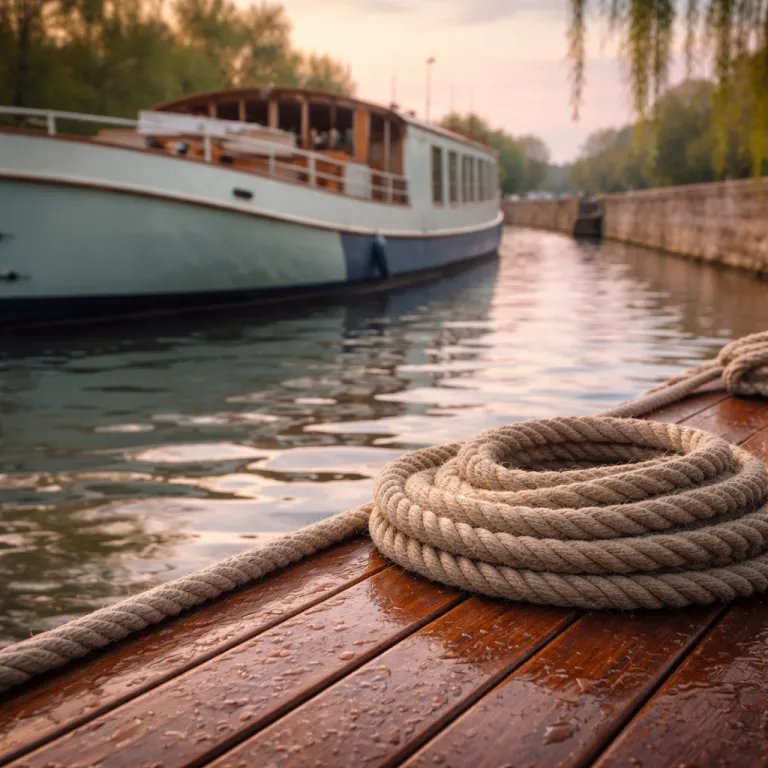
The pace of a Burgundy luxury barge cruise on the canal
The Canal de Bourgogne, a 242 km inland waterway with 189 locks linking the Yonne and Saône rivers, opens each April and with it a very specific kind of luxury. A Burgundy luxury barge cruise along this canal trades ocean swell and casino decks for four knots, stone bridges, and the quiet theatre of southern Burgundy unfolding at eye level. By the time you have settled into your cabin on European Waterways’ Finesse, the argument for travelling slowly feels less like a trend and more like a course correction.
This is barge cruising as an antidote to ship cruising; eight guests, six crew, and a hotel barge that behaves more like a moving boutique hotel than a vessel. The barge itself is compact yet indulgent, with four spacious cabins for just eight guests, each with en suite bathroom, climate control, and picture windows, plus a small spa pool on deck and a crew who will remember how you take your coffee by the second day. On this kind of barge holiday, the canal is not a backdrop but the main event, a narrow ribbon through Burgundy where time stretches and every lock becomes a tiny stage.
From the first afternoon near Dijon’s outskirts, the Burgundy Canal sets the rhythm for the entire cruise Burgundy itinerary. The barge usually embarks close to Dijon, around the Port du Canal area, where private transfers from Dijon Ville or Dijon TGV station take less than 20 minutes. Once on board, the barge eases into the first lock, stone walls inches from the hull, and you can step ashore to walk the towpath while the captain and éclusier handle the gates. Many guests will alternate between this gentle walking, short bicycle rides along the canal, and simply sitting on deck with a glass of wine, watching France slide past at walking pace.
On a typical six night programme, each day feels both structured and loose, with the waterways dictating when you move and when you linger. Morning might mean a guided tour to a nearby château or village, while afternoons are often reserved for slow stretches of barge cruising between locks, sometimes only a few kilometres but rich in detail. If you are used to large cruises where the ship races overnight between ports, this kind of canal cruise in Burgundy encourages you to read the landscape instead of the daily programme.
The Finesse is not alone on these waterways; La Belle Epoque and L’Impressionniste also work this region as classic luxury barges operated by established hotel barge companies. La Belle Epoque, a 12 passenger luxury hotel barge with a sun deck spa pool and six cabins, feels like a floating country house, while L’Impressionniste offers upscale accommodations on a similar route through southern Burgundy with a comparable crew to guest ratio. Magnolia, a smaller six passenger barge, runs half board cruises that appeal to travellers who like some meals ashore in local French restaurants.
For couples used to ocean cruises, the crew to guest ratio here is the revelation. Six crew for eight guests means the captain can pause the barge for an impromptu photo stop, the chef can adjust a food and wine pairing to your preferences, and the guide can rework a tour if the weather shifts. This is ultra deluxe service in the most understated sense, closer to a private villa with staff than to a traditional cruise ship.
Day by day along the Burgundy Canal: locks, towpaths and châteaux
The season on the Burgundy Canal runs from April to October, and each month has its own character. Early season brings bright greens and quieter locks, while late summer and early autumn wrap your Burgundy luxury barge cruise in vineyard golds and cooler evenings on deck. Whenever you sail, the six night, seven day arc aboard Finesse follows a satisfying pattern that balances movement, hotel like comfort, and shore time, and answers practical questions about what a week on the Canal de Bourgogne really looks like.
Embarkation usually happens near Dijon, where the barge is moored in a quiet basin just beyond the city. After a first lunch that sets the tone for the week’s food and wine, the barge nudges into the first lock and you begin to understand why barge cruises have become the emblem of slow tourism in France. The canal is narrow, the banks low, and by the time you reach the second or third lock, guests will already be stepping off to walk or cycle the towpath between locks.
To give a sense of a typical Burgundy barge week itinerary, imagine a sample day: breakfast around 8:00, a morning excursion by minivan at 9:30, a return to the barge for a 13:00 lunch, then three to four hours of gentle cruising in the afternoon before aperitifs at 19:00 and dinner at 19:30. On one day, the itinerary might take you by minivan to Pommard for a cellar visit, then on to Meursault for a guided wine tasting in a vaulted stone cave. Another day might focus on a château visit, perhaps a stop at Ancy le Franc, whose Italianate architecture and frescoes feel almost theatrical after the quiet of the canal. These excursions are included in the cruise, and the guide’s commentary turns what could be a simple tour into a deeper reading of Burgundy’s layered history.
Back on board, the hotel barge feels like a private dining room on water, with only eight guests seated at a single table. Lunch might be a three course menu built around local produce, paired with a white Burgundy and a lighter red, while dinner stretches to four or five courses with more structured wines. Over the week, you will taste both village level bottles and more serious grand cru wines, often introduced by the onboard host who has visited the domaines personally.
The lock system itself becomes part of the entertainment, especially around Les Laumes and other clusters where the barge climbs or descends in quick succession. Standing on deck as the water drains, stone walls rising above you, is a reminder that these waterways were once industrial arteries, not leisure playgrounds. Today, the only cargo is conversation, bicycles, and the quiet satisfaction of having time to watch the process unfold; travellers who like to plan can even download a Canal de Bourgogne locks map before departure to follow progress from one reach to the next.
For travellers comparing this to larger luxury cruises, it helps to think of the barge as a moving country hotel with only a handful of rooms. There is no theatre, no casino, and no need for a deck plan; instead, the drama lies in the next lock, the next village, the next glass poured at dinner. If you are mapping out a broader year of high end voyages, it can be useful to read an editorial overview of world luxury cruise lines to see how small hotel barges fit alongside larger ships, then place a week on the Burgundy Canal as the intimate counterpoint.
Wine, châteaux and towpaths: the curated pleasures of southern Burgundy
The wine programme on a Burgundy luxury barge cruise is where the region’s reputation becomes tangible. European Waterways and similar operators have long cultivated relationships with family run vineyards, which means guests are taken beyond standard tastings to cellars that independent travellers rarely access. Over six nights, you move from approachable village wines to structured grand cru bottles, each anchored in a specific slope you have likely seen from the canal.
Visits might include a stop at a biodynamic domaine for reds in the Côte de Nuits, or a tasting in Puligny Montrachet, where white Burgundy reaches almost architectural precision. These are not mass market experiences; they are small group tastings where eight guests can ask detailed questions and linger over each pour. The contrast with large ship shore excursions, where dozens of passengers file through a single cellar, could not be sharper.
Food on board is treated with the same seriousness as the wine, with chefs drawing on Burgundy’s deep pantry of Charolais beef, Bresse chicken, and Époisses cheese. Some hotel barges in the region experiment with dine around evenings in local French restaurants, but on Finesse the emphasis remains on refined onboard dining that feels closer to a private table in a luxury hotel. Each course is plated with care, and the pairing of food and wine becomes a nightly ritual that anchors the day’s slow movement along the canal.
Between meals and tastings, the towpath offers a gentle counterweight to all this indulgence. Bicycles are available on board, and many guests will hop off at one lock, cycle a few kilometres along the Burgundy Canal, then rejoin the barge at the next lock or village. It is active leisure in its most civilised form, with no pressure to cover distance and every excuse to stop for a photograph of a stone bridge or a line of poplars reflected in the water.
Château visits add another layer, from the Renaissance geometry of Ancy le Franc to more fortified sites that speak to Burgundy’s strategic past. Walking through these rooms after arriving by canal rather than motorway changes the mood; you feel the distance, the time, the way waterways once structured life in this part of France. For couples who have already ticked off more dramatic expedition style voyages, such as premium Galápagos cruise tours or polar itineraries, this quiet, landlocked route offers a different kind of immersion.
One dataset line captures the appeal succinctly for anyone planning their own route through Europe’s inland waterways: “What activities are available during the cruise? What is the best time to cruise the Canal de Bourgogne? Are meals included on luxury barge cruises? The Canal de Bourgogne opens for the season, offering luxury barge cruises.” Read that once, and you understand why April to October has become the sweet spot for travellers who care as much about food and wine as they do about movement.
Who a Burgundy barge cruise is for, and how to book the right week
A week on the Burgundy Canal suits a very specific traveller profile. Couples between 35 and 65 who value time, space, and conversation over spectacle tend to thrive here, especially if they already know their way around a wine list. Second time luxury cruisers, those who have tried the big ships and are now looking for something quieter, often describe their first barge cruise as a reset.
There are, of course, trade offs. You will not find a horizon line, no swell, and no ports in the classic cruise sense, only small villages and towpaths that repeat in their simplicity. For some, that absence of drama is precisely the point; the luxury lies in the ability to read a book on deck, watch a heron lift from the reeds, and know that the barge will only move a few kilometres before lunch.
Seasonality matters when you choose your dates, especially as interest in slow tourism and culinary travel continues to rise. April and May bring fresher temperatures and quieter locks, while peak August on the Burgundy Canal is already constrained, with many departures fully booked months in advance. Late June and early September have quietly become the premium weeks, with warm days, cooler nights, and vineyards either approaching or just past harvest.
Booking early is essential if you want specific cabins or a full boat charter for a group of friends. Most Burgundy luxury barge cruise itineraries on European Waterways, La Belle Epoque, L’Impressionniste, and Magnolia operate from April to October, with six or seven day cruises that include accommodation, meals, drinks, and guided excursions. As a broad guide, per person prices for a shared departure often start in the mid four figures in euros or dollars in shoulder season, while exclusive charter rates for a full barge can reach the low to mid five figure range depending on season and vessel. If you are building a broader year of travel that might also include a refined seven day Norwegian cruise or a premium itinerary along the Mexican Riviera, it makes sense to lock in your Burgundy week first because capacity is so limited.
For travellers comparing regions, it is worth noting that the Canal de Bourgogne offers a more intimate, rural experience than the busier Canal du Midi in southern France. Both waterways support canal cruises and hotel barges, but Burgundy’s combination of vineyards, châteaux, and grand cru villages gives it a particular pull for oenophiles. If you want more bustle and Mediterranean light, the Canal du Midi and its canal cruise options may suit; if you want quiet towpaths and serious wine, cruise Burgundy instead.
Whichever route you choose, the core equation remains the same: a small barge, a narrow canal, a handful of guests, and a crew whose attention turns a simple week into something quietly ultra deluxe. By the time you disembark, the idea of rushing between ports on a large ship will feel faintly absurd, and you may already be planning a return to these European waterways for another slow season. In a travel landscape obsessed with more, faster, bigger, the Burgundy barge stands its ground at four knots and proves that less, slower, smaller can feel like the greatest luxury of all.
FAQ
What is the best time of year for a Burgundy luxury barge cruise on the Canal de Bourgogne ?
The Canal de Bourgogne operates for luxury barge cruises from April to October, with full services available throughout this period. April to May and late September offer quieter locks and cooler temperatures, while June to early September bring warmer days and more activity along the towpaths. Peak August dates often sell out early, so couples seeking a calmer atmosphere should consider late June or early autumn.
Are meals and wine included on a Burgundy barge cruise, and how good is the food ?
On reputable hotel barges such as European Waterways’ Finesse, La Belle Epoque, and L’Impressionniste, all meals, most drinks, and curated wine pairings are included in the cruise fare. Chefs focus on regional French cuisine, building multi course menus around local produce and cheeses, with thoughtful food and wine pairings each evening. The standard is closer to an intimate restaurant in a luxury hotel than to a typical ship buffet.
What activities can guests expect during a week on the Burgundy Canal ?
Typical activities include guided excursions to vineyards for wine tasting, visits to châteaux such as Ancy le Franc, and walking tours of small Burgundy towns. Guests can also use onboard bicycles to ride the towpaths between locks, rejoining the barge at the next stop. Onboard, the pace is relaxed, with time for reading on deck, watching the lock operations, and enjoying long lunches as the barge moves slowly along the canal.
How does a Burgundy barge cruise compare to an ocean cruise for couples ?
A Burgundy luxury barge cruise offers a far more intimate experience than an ocean cruise, with only six to twelve guests instead of thousands. There are no theatres, casinos, or multiple restaurants; instead, you have a single dining room, a small deck, and a crew who quickly learn your preferences. Couples who value quiet, conversation, and a strong sense of place usually find barge cruising more rewarding than large ship itineraries.
Do I need to be very active to enjoy barge cruising on the Canal de Bourgogne ?
You do not need to be highly active, but a reasonable level of mobility helps you enjoy the experience fully. Walking on uneven village streets, climbing a few steps on and off the barge, and cycling short distances along the towpath are typical activities. Guests who prefer to stay on board can still enjoy the scenery, the lock operations, and the onboard hospitality without joining every excursion.